Tesla's Self-Driving Promise Gets Narrower
The long-awaited unsupervised mode will launch in 2027, but only within limited city zones controlled by the company.
By Samir Nasser ·
For nearly a decade, the central promise of Tesla’s Full Self-Driving (FSD) system has been a car that drives itself anywhere, leaving the owner to relax in the back seat. On the company’s Q3 2026 earnings call, that vision took a significant turn. AI chief Ashok Elluswamy confirmed that unsupervised FSD in customer-owned vehicles is now targeted for the second quarter of 2027. However, the definition of what that means has shifted dramatically. It is no longer about a software update that grants owners total freedom of movement. Instead, it involves integrating private cars into Tesla’s managed Robotaxi fleet, limiting autonomous operation to specific, pre-approved zones.
The shift in strategy was highlighted by a question submitted by retail shareholders representing approximately 1.1 million shares: "When can we anticipate FSD unsupervised in customer cars?" Elluswamy’s response identified Q2 2027 as the target date. He clarified that this initial phase is not about enabling owners to sleep during their daily commutes. Rather, it is a mechanism for Tesla to utilize owner-supplied vehicles within its own operational network. The car drives itself only where the company’s Robotaxi service is already active and controlled.
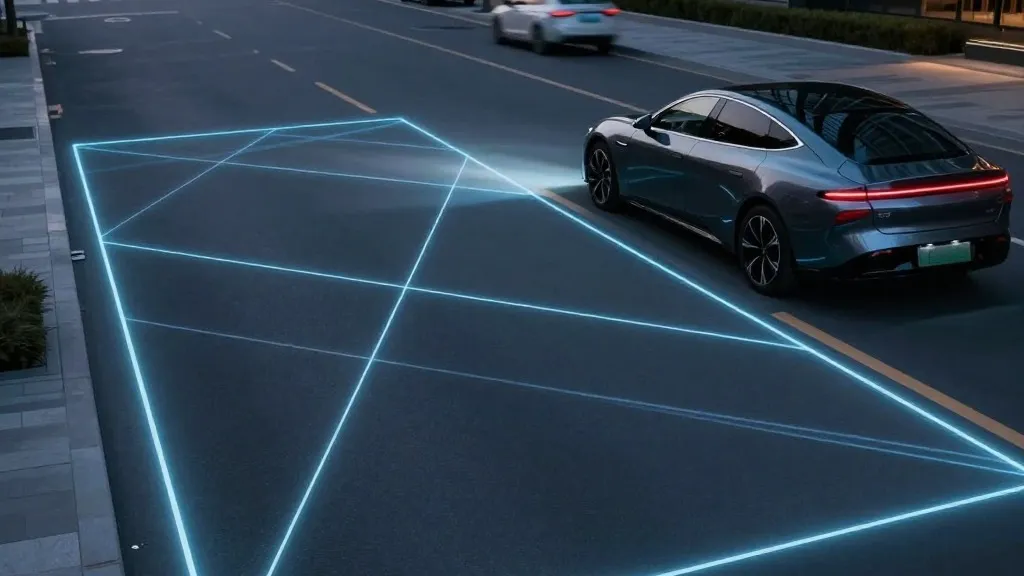
The geographic scope of this new capability is currently quite limited. Tesla’s Robotaxi service operates in six U.S. metropolitan areas, but the service areas within those cities are small slices of the total urban landscape. For instance, the Miami zone primarily covers West Miami and a strip extending toward Doral and Sweetwater. Similar small geofences were established when service launched in Orlando and Tampa in July. Within these boundaries, the vehicles stick to low-speed routes, largely avoid highways, and steer clear of the more complex driving environments found in dense urban centers.
Even within these limited zones, the technology faces regulatory hurdles. In the Bay Area, the service is not yet fully unsupervised because California regulations require a safety driver in every vehicle. Tesla has chosen not to release certain data to the California DMV, a step required for systems operating beyond Level 2 autonomy. This regulatory friction highlights the gap between the current operational reality and the broader vision of widespread autonomous driving.
The scale of the current operation is modest compared to the company's past rhetoric. By the end of the third quarter, Tesla reported that its Robotaxi program had accumulated nearly 2 million unsupervised miles, a figure that includes the Cybercab model which joined the Austin fleet just a month prior. Third-party tracking data from earlier this year indicated that the number of fully driverless Teslas on the road remained in the dozens. This stands in contrast to the hundreds of thousands of vehicles previously suggested by leadership. Meanwhile, competitor Waymo had already established a presence in both Orlando and Tampa before Tesla’s entry, accumulating over 3 million miles in the process.
This current trajectory diverges sharply from the product pitch that has defined FSD sales since 2016. The original promise was a car that would eventually drive itself anywhere through a simple software update. In July 2025, leadership told investors that unsupervised FSD would be available for personal use in certain geographies by the end of that year. A year prior, they expressed surprise if the technology was not realized by the following year. Complicating matters further, owners of vehicles equipped with Hardware 3 have already been informed that their cars cannot run unsupervised FSD at all, with no clear upgrade path provided.
The new target date of Q2 2027 comes with a narrower product definition: the car joins Tesla’s fleet, operates in Tesla’s zones, and follows Tesla’s terms. This represents a move away from the "drive you anywhere" model to a more constrained service. There are no highway road trips, no cross-town airport runs, and no unsupervised commutes unless the owner’s home and workplace happen to fall within one of the small, controlled geofences. The goalpost has moved from universal autonomy to localized fleet integration.
During the call, it became clear that the timeline is still subject to significant uncertainty. Elluswamy reiterated that safety remains the primary bottleneck, which is why the company limits operations to low-speed roads and avoids more difficult environments. While he guessed that these safety issues would be resolved by next year, he acknowledged that the exact timing is not yet known. For buyers, the promise is no longer about a self-driving companion for the entire world, but a specific service within a specific, shrinking perimeter.
Source: Electrek